Content
This page serves as the central repository for course materials. All chapter readings, lecture slides, and in-class assignments will be posted here and organized by type. Content will be updated periodically as we move through the semester.
Please check this page regularly to ensure you are up to date with course materials.
Powerpoint Materials
Unit 1: Introduction to Child Development
Homework Assignments
Why are we doing this?
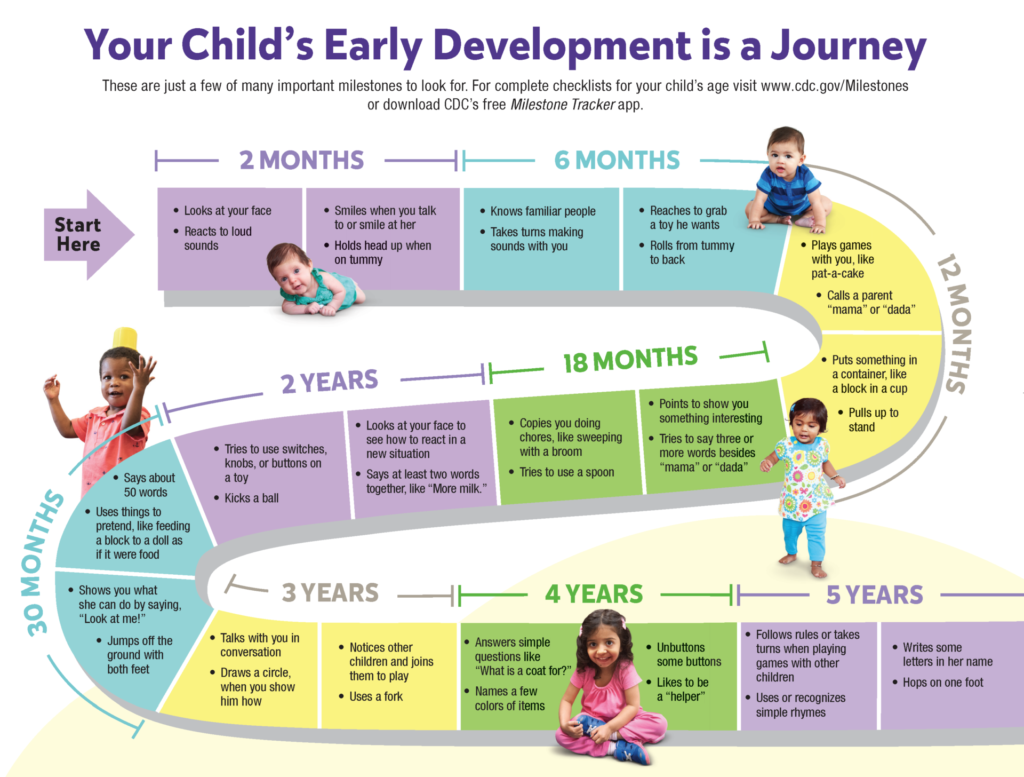
When people think about child development, they often think in terms of milestones: when a child should walk, talk, read, or behave in certain ways. Milestones are widely used in parenting resources, education, and healthcare, and they play an important role in identifying when children may need additional support. At the same time, developmental psychology emphasizes that development is variable, context-dependent, and shaped by both biology and environment. There is no single “normal” path that all children follow. This assignment introduces you to that tension early in the course by asking you to examine how developmental science is translated into real-world guidance—and what can be gained or lost in that process.
Required Media
1. CDC — “Learn the Signs. Act Early.” Developmental Milestones
Link: https://www.cdc.gov/act-early/milestones/index.html
Homework Prompt
Using the required media above, respond to the prompts below:
- Summary
In at least 1–2 sentences, describe what this resource is and what it claims about child development. What is the purpose of presenting development through milestones? - Application
Choose one developmental concept from Chapter 1 and explain how it helps you interpret the milestone charts. - Critique
Identify one limitation or underlying assumption of this resource (e.g., cultural/socioeconomic differences, variability, misinterpretation). - Question
Pose one thoughtful question this resource raised for you about how we define “normal development.”
Submission Guidelines
- Length: ~500 words total
- Format: Paragraph form
- Grading: Completion and thoughtful engagement (not writing mechanics)

Why are we doing this?
Developmental psychology is not just a collection of correct answers—it is a field that has changed over time as evidence improves. Some theories became influential not because they were accurate, but because they fit cultural assumptions, professional authority, or limited research methods available at the time. By examining a historical theory that caused harm, we learn how to evaluate developmental claims, recognize bias, and understand why evidence, replication, and context matter. This helps us become more careful consumers of scientific information today.
Required Media
- AMA Journal of Ethics (2015) — “Mothers and Autism: The Evolution of Discourse and Blame”
Link: https://journalofethics.ama-assn.org/article/mothers-and-autism-evolution-discourse-blame/2015-04
Homework Prompt
Using the required media above, respond to the prompts below:
- Framing the Problem
According to the authors, how did early explanations of autism become focused on mothers rather than neurodevelopmental processes? Why were these ideas taken seriously at the time? - Developmental Psychology Critique
Using Chapter 2 concepts, explain two reasons the refrigerator mother theory was a bad developmental explanation. - Consequences of Theory
What were the consequences for families and for autism research/clinical practice? Why does this history matter today? - Question
Pose one thoughtful question about how we evaluate theories in developmental psychology.
Submission Guidelines
- Length: ~500 words total
- Format: Paragraph form
- Grading: Completion and thoughtful engagement (not writing mechanics)
Why are we doing this?

Prenatal development is shaped not only by biology but also by environmental conditions and social systems. While discussions of prenatal risk often focus on individual behaviors, many significant risks—such as exposure to environmental toxins—are unevenly distributed across communities due to housing, infrastructure, and long-standing structural inequality. This assignment asks you to examine prenatal lead exposure from both a biological and structural perspective.
Required Media
- NCBI Bookshelf — “Lead Exposure During Pregnancy”
Link: https://www.ncbi.nlm.nih.gov/books/NBK582785/ - University of Notre Dame Research News — “Blood lead levels show enduring legacy of structural racism”
Link: https://research.nd.edu/news-and-events/news/blood-lead-levels-show-enduring-legacy-of-structural-racism/
Homework Prompt
Using the required media above, respond to the prompts below:
- Summary
What does each source emphasize about prenatal lead exposure (biological risk vs structural context)? - Application
Choose one concept from Chapter 3 and apply it to the readings. - Structural Interpretation
Who is most likely to be exposed to lead during pregnancy, and why? Focus on systems, not individual choice. - Question
Pose one thoughtful question about prenatal risk and unequal exposure.
Submission Guidelines
- Length: ~500 words total
- Format: Paragraph form
- Grading: Completion and thoughtful engagement (not writing mechanics)

Why are we doing this?
Pregnancy and childbirth are often portrayed as routine or seamlessly “natural,” but biologically they involve intense physiological demands and real medical risk. Labor, delivery, pregnancy loss, and the postpartum period can all involve rapid physical change, serious complications, and danger for the birthing parent and baby. This assignment uses global health evidence and educational videos to highlight why pregnancy and childbirth deserve to be treated with the seriousness of other major medical events.
Required Media (required)
- WHO Fact Sheet — Maternal mortality
Link: https://www.who.int/news-room/fact-sheets/detail/maternal-mortality - Video — What happens in your body during a miscarriage?
Link: https://www.youtube.com/watch?v=fKja0y17vt4 - Video — The surprising effects of pregnancy
Link: https://www.youtube.com/watch?v=F_ssj7-8rYg - Video — Patient Education Animation: Labor and Vaginal Birth
Link: https://www.youtube.com/watch?v=ZDP_ewMDxCo - Video — This is Your Postpartum In 2 Minutes
Link: https://www.youtube.com/watch?v=xwoi_Jsx2zc
Homework Prompt
Using the required media above, respond to the prompts below:
- WHO & Systems thinking
Why is maternal mortality not only a medical issue, but also a systems issue? - Pregnancy changes and risk
Choose two body changes shown in the pregnancy video. For each: what is it doing, and how could it increase risk? - Labor & fast Decision-making
Describe one moment during labor where risk can change quickly. Why might that require rapid medical decisions? - Postpartum Matters
Give two reasons postpartum recovery can be medically intense. How does this connect to preventing severe outcomes? - Miscarriage as a Medical event
Share one medical fact that many people misunderstand about miscarriage. Why does misunderstanding it matter?
Submission Guidelines
- Length: ~500 words total
- Format: Paragraph form (short labeled paragraphs are fine)
- Grading: Completion and thoughtful engagement (not writing mechanics)
Why are we doing this?
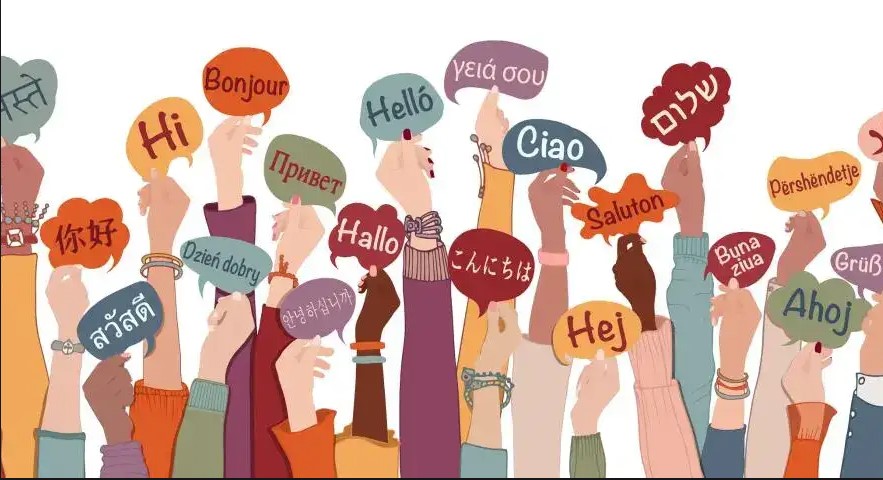
A common belief about infancy is that exposure to more than one language will “confuse” babies or cause language delays. This idea shows up in parenting advice, schools, and media, and it often frames bilingualism as a developmental risk rather than a normal form of language learning. Developmental research does not support this belief. This assignment examines evidence about bilingual development and helps you distinguish delay vs difference.
Required Media
- PMC Reading — “Bilingualism in the Early Years: What the Science Says”
Link: https://pmc.ncbi.nlm.nih.gov/articles/PMC6168212/ - Video
Link: https://www.youtube.com/watch?v=vOhWg0YeIMs - Video
Link: https://www.youtube.com/watch?v=LVYhpCprtzQ
Homework Prompt
Using the required media above, respond to the prompts below:
- Summary
Summarize the main claim of the reading, then summarize the key message shared across the videos. - Application
Choose one concept from Chapter 5 and connect it to the sources. - Delay vs Difference
Why might bilingual children appear delayed compared to monolingual expectations? How do the sources explain difference vs deficit? - Question
Pose one thoughtful question about bilingual development or milestones.
Submission Guidelines
- Length: ~500 words total
- Format: Paragraph form
- Grading: Completion and thoughtful engagement (not writing mechanics)
Why are we doing this?
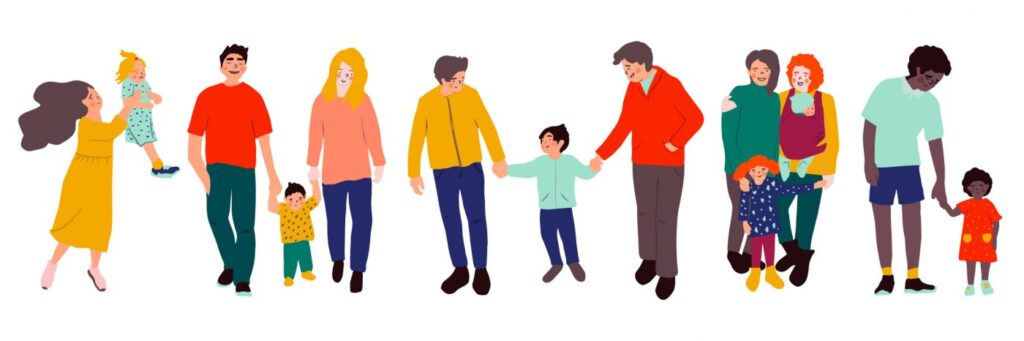
Ideas about what children need to thrive are often shaped by assumptions about family structure rather than by developmental science. A common assumption is that children require both a mother and a father to develop normally, and that children raised by same-sex parents are at risk for poorer outcomes. Decades of research do not support this belief. This assignment examines how evidence challenges myths and biases about family structure.
Required Media
- SDSU — “Groundbreaking 38-Year Study Offers Rare Perspective on Children of Lesbian Parents”
Link: https://www.sdsu.edu/news/2024/06/groundbreaking-38-year-study-offers-rare-perspective-on-children-of-lesbian-parents - Williams Institute — “LGBT Parenting in the United States”
Link: https://williamsinstitute.law.ucla.edu/publications/lgbt-parenting-us/ - Video — “Are kids of gay parents disadvantaged?” (ABC News Fact Check)
Link: https://www.youtube.com/watch?v=UnX6zl3hZ7Q&t=97s
Homework Prompt
Using the required media above, respond to the prompts below:
- Summary
Summarize the main findings of the SDSU article and the Williams Institute report. - Application
Choose one chapter concept and apply it to these sources. - Myth vs Evidence
What myth is challenged by the Williams Institute data and the video? How does evidence contradict it? - Question
Pose one thoughtful question about family diversity and development.
Submission Guidelines
- Length: ~500 words total
- Format: Paragraph form
- Grading: Completion and thoughtful engagement (not writing mechanics)

Why are we doing this?
Middle childhood is a period when children develop greater self-control, rule understanding, and responsibility. A common question is whether spanking is an effective discipline strategy. Developmental research suggests that while physical punishment may produce short-term compliance, it is linked to negative outcomes over time. This assignment examines evidence on corporal punishment and alternatives.
Required Media
- PMC Reading — “Physical punishment of children: lessons from 20 years of research”
Link: https://pmc.ncbi.nlm.nih.gov/articles/PMC3447048/
Homework Prompt
Using the required media above, respond to the prompts below:
- Summary
Summarize the main takeaway about physical punishment and development. - Outcomes
Identify two developmental outcomes linked to physical punishment (one behavioral and one emotional/social). - What Works Instead
Describe two alternatives that better support long-term development and explain why. - Question
Pose one thoughtful question about discipline, development, or interpreting research.
Submission Guidelines
- Length: ~500 words total
- Format: Paragraph form
- Grading: Completion and thoughtful engagement (not writing mechanics)

Why are we doing this?
Adolescence is a period of major emotional, social, and identity development. Mental health content online can reduce stigma and increase help-seeking, but it can also spread misinformation and oversimplified symptom narratives. This assignment examines how misinformation spreads and how we can respond in ways that support adolescents.
Required Media
- APA — “Addressing misinformation about mental health with patients”
Link: https://www.apa.org/topics/journalism-facts/misinformation-mental-health - APA Monitor — “Ending health misinformation”
Link: https://www.apa.org/monitor/2024/07/ending-health-misinformation
Homework Prompt
Using the required media above, respond to the prompts below:
- Summary
Summarize the key takeaway of each APA source. What do they suggest about how misinformation spreads and why it matters? - Application
Choose one concept from Chapter 8 and connect it to these readings. - Interpretation: Support vs Harm
Describe one way online mental health content can support adolescents and one way it can cause harm. - Question
Pose one thoughtful question about adolescent mental health, misinformation, or diagnosis.
Submission Guidelines
- Length: ~500 words total
- Format: Paragraph form
- Grading: Completion and thoughtful engagement (not writing mechanics)

